
Britannia Hut

One of the most visited huts in the Saas-Fee valley
Felskinn, Valais
The Britannia Hut is a mountain hut belonging to the Geneva section of the Swiss Alpine Club (SAC). It sits at 3030 m above sea level in the canton of Valais, above Saas-Fee. With up to 9’697 visitors a year, it is one of the busiest SAC huts in the Alps.
Location and surroundings
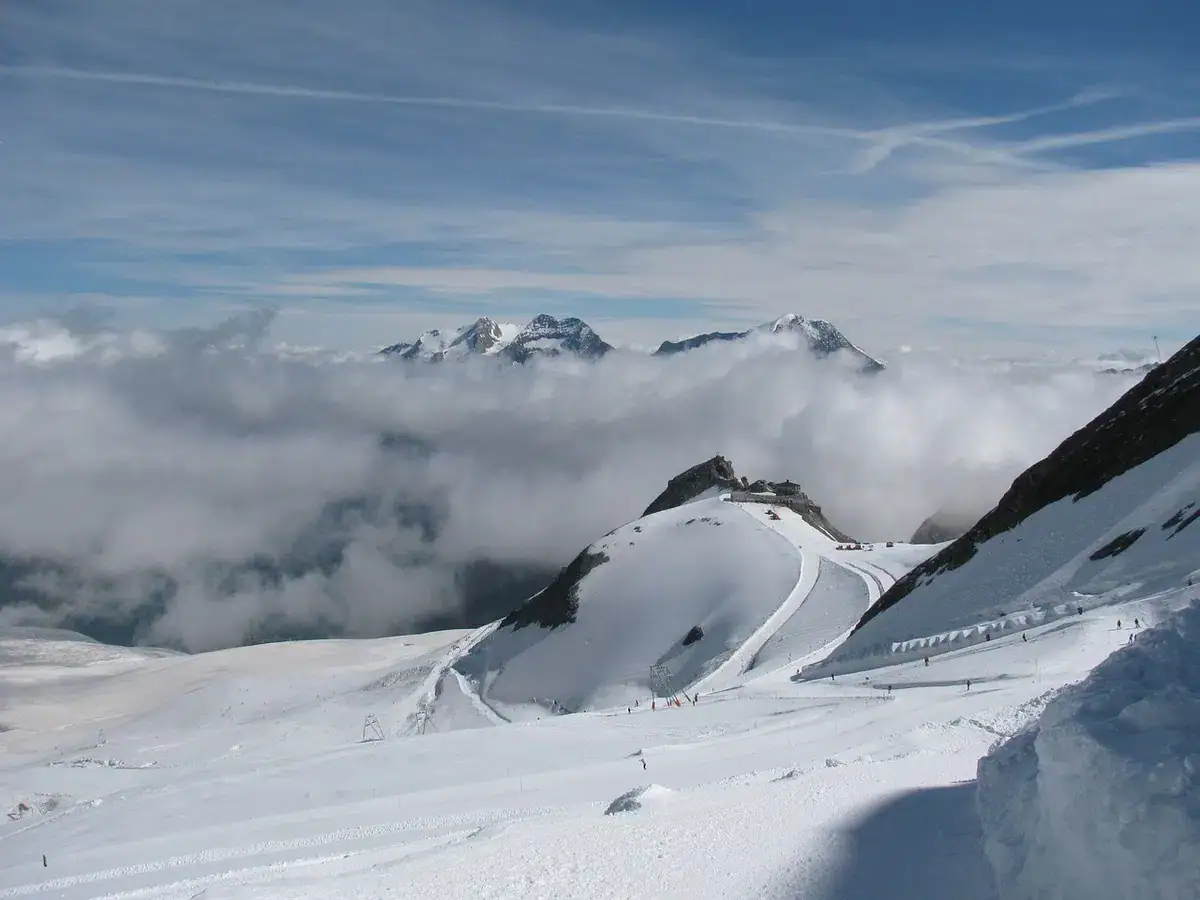
The Britannia Hut sits on a pass between the Hinter and Klein Allalin, south-east of the Felskinn, at the foot of the Allalinhorn. It has 101 beds with duvets, three dining rooms and modern washrooms. Power comes from the hut's own solar installation. A 16’000-litre tank beneath the hut collects meltwater and rainwater. Waste is separated and flown down to the valley by helicopter along with the wastewater. A winter room, open all year round, offers 12 beds.
Opening times and prices
The hut is staffed and open during the ski mountaineering season in spring and throughout the summer months. It offers half board and has running water and electricity. You can pay in cash or by credit card. You'll find more information on the hut's website: Britannia Hut.

Facilities and services
Despite its high alpine location at 3030 m, the Britannia Hut offers remarkable comfort:
- 101 beds with duvets
- Three separate dining rooms
- Modern washrooms
- Solar-powered electricity
- Running water (16,000-litre tank)
- Half board with dinner and breakfast
- Hut slippers provided
- Winter room with 12 beds, open all year round
- Cash and credit card payment accepted
- Eco-friendly waste disposal (recycling)
- Telephone connection
The hut was completely renovated in 1997 and upgraded for energy efficiency in 2022, making a stay at this altitude particularly comfortable.
Tours we offer to, near or via the Britannia Hut

Allalinhorn and Strahlhorn
2 days, high alpine tour
Together with one of our experienced mountain guides, you'll reach this hut after climbing the Allalinhorn. On the second day, we summit the Strahlhorn together.

4000m peaks tour week in Valais
5 days, high alpine tour
Over 5 days we climb renowned 4000m peaks in Valais and learn how to handle an ice axe, crampons and rope properly. By the end of this special high alpine week, you'll be able to tackle easy high alpine tours on your own.

Glacier trek around Monte Rosa
6 days, glacier trek
Together we circle Switzerland's largest massif on a unique glacier trek over passes and along ancient Walser paths.

Ski mountaineering tour Allalinhorn and Strahlhorn
2 days, ski mountaineering tour
A two-day ski mountaineering tour that takes us from the Metro Alpin up the Allalinhorn and Strahlhorn via the Britannia Hut.
More tour options
The hut is the starting point for numerous high alpine tours and ski mountaineering tours:
Summer tours:
- Allalinhorn (4027 m)
- Strahlhorn (4190 m)
- Rimpfischhorn (4199 m)
- Alphubel (4206 m)
- Egginer (3370 m)
- Fluchthorn (3795 m)
- Allalinhorn via the Hohlaub ridge
- Britannia via ferrata (K2-K4)
- Valais Haute Route (long-distance trek to Chamonix)
Ski mountaineering in winter:
Fascinating facts about the Britannia Hut
History and development
The hut was built in 1912 as a wooden structure with 34 beds. The construction costs of 20’000 Swiss francs were funded by an association of British SAC members, which is how the hut got its name. In 1929 a stone building with 84 beds replaced the original. It was extended in 1951, and in 1996/97 the hut was completely renovated with a focus on environmental sustainability. In September 2022 a further partial refurbishment was carried out to improve its energy efficiency.
Architecture and construction
The Britannia Hut has gone through several construction phases, each with its own architectural features:
- Wooden construction in the traditional hut style
- Simple rectangular floor plan
- 34 beds in a tight space
- Typical alpine design with a steep roof to handle snow loads
- Complete replacement of the wooden hut with a sturdier stone structure
- Expansion to 84 beds
- Adapted to alpine weather conditions with massive exterior walls
- Traditional pitched roof with natural stone covering
- Enlargement of the main building
- Increased sleeping capacity
- Improved kitchen and common rooms
- Modern architectural concept that preserves the alpine character
- Expansion to 101 beds
- Integration of environmental technologies:
- Roof structure with solar panels
- Rainwater collection system on the roof
- Underground 16,000-litre water tank
- Three separate dining rooms for better use of space
- Functional separation of sleeping, dining and technical areas
- Insulation to the latest standards for alpine conditions
- Energy optimisation of the building
- Modernisation of the technical systems
- Improved energy efficiency
The building is architecturally adapted to the extreme altitude and climate, with a particular focus on withstanding winter storms, snow loads and UV radiation. The hut has a separate winter room that is accessible all year round and provides shelter for 12 climbers even when the hut is unstaffed.
Research and science
Thanks to its strategic location at 3030 m, surrounded by glaciated 4000m peaks, the Britannia Hut serves as an important base for a range of scientific projects:
Glaciological research:
- Observation base for the movements of the Hohlaub and Allalin glaciers
- Documenting glacier retreat since the 1980s
- Collecting long-term data series on ice thickness and glacier flow speed
- Measuring snow cover development in the high mountains
Weather station:
- Automatic weather station installed near the hut by MeteoSwiss
- Continuous real-time recording of alpine climate data
- Contribution to the alpine early-warning system for extreme weather events
- Long-term data on climate change in the high mountain zone
Alpine medicine studies:
- Research into altitude adaptation in mountain athletes
- Medical studies on the effects of rapid ascent (from Saas-Fee to over 3000 m)
- Field laboratory for research into acute mountain sickness
Ecological monitoring:
- Observing the alpine flora around the hut
- Documenting shifts in vegetation zones caused by climate change
- Recording new plant species appearing at previously barren altitudes
Environmental technology pilot projects:
- Test site for autonomous energy supply systems in the high mountains
- Developing and optimising solar panels for extreme high-altitude conditions
- Innovative solutions for water treatment and reuse
- Trialling new wastewater treatment systems for remote locations
Support for international research projects:
- Cooperation with universities in Switzerland, Germany and Italy
- Accommodation for research teams
- Logistics base for scientific expeditions on glaciated terrain
The research findings are published in scientific journals and contribute to a better understanding of the alpine environment and how it is changing. The hut itself is a practical example of sustainable mountain hut management under extreme conditions.
Environment and sustainability
The Britannia Hut has established itself as a pioneer of eco-friendly hut management in the high mountains:
Energy supply:
- All electricity generated by the hut's own solar installation
- Photovoltaic modules optimally aligned for maximum sunlight
- Smart energy management system to cover periods with little sun
- Energy-saving LED lighting throughout the building
- Solar thermal system for hot water
Water cycle:
- 16,000-litre tank beneath the hut for meltwater and rainwater
- Efficient rainwater collection systems on the roof
- Water-saving fittings in the kitchen and washrooms
- Multi-stage filtration system for drinking water
- Special wastewater treatment before transport down to the valley
Waste management:
- Strict separation of waste into different categories
- Regular helicopter transport of waste down to the valley
- Minimal single-use packaging in the hut's catering
- Composting of suitable organic waste
- “Carry in – carry out” principle for ski tourers and hikers
Building measures:
- Comprehensive thermal insulation to save energy
- Use of local, eco-friendly building materials in renovations
- During the 2022 partial refurbishment: modern insulation materials for energy optimisation
- Heat-resistant insulation against alpine UV radiation
Operations:
- Preference for regional food to reduce transport
- Use of durable, repairable equipment
- Eco-friendly cleaning products for the sensitive alpine environment
- Mindful use of resources in the day-to-day running of the hut
Visitor management:
- Information boards raising guests' awareness of environmental issues
- Marked paths to prevent trampling of sensitive vegetation
- Education on environmentally responsible behaviour in the high mountains
- Limits on daily visitor numbers during peak periods
Certifications:
- Awarded the SAC environmental seal of quality for sustainable hut management
- Participation in the Swiss Alpine Club's “Clean Mountain Huts” programme
- Regular environmental audits to reduce the ecological footprint
Through its sustainable operation, the Britannia Hut proves that eco-friendly hut management is possible even at extreme altitudes, and it serves as a model project for other alpine accommodation.
Practical tips for visiting the hut
- Booking ahead is essential in high season
- Glacier equipment isn't required, but is recommended for further tours from the hut
- Good acclimatisation is an advantage
- Keep a close eye on the weather forecast
- Don't forget emergency equipment and a first aid kit
- Bring working means of communication
- If you'd rather visit with a mountain guide, get in touch via our contact form.
Impressions of the hut and the surrounding area

Saas-Fee in autumn
Strahlhorn and Rimpfischhorn seen from the hut
The best time to visit the Britannia Hut
The best time to visit the Britannia Hut in the Swiss Alps is high summer, from July to September, when the weather is at its most stable and most trails are free of snow and easy to walk. The hut is also open during the winter season from March to May, making it a great base for ski tourers.
Didn't find what you're looking for?
Have you been dreaming of a particular adventure for ages, but the planning is holding you back? Maybe you need the expertise of an experienced guide to support your alpine plans?
We welcome special requests, whatever the shape or size of your adventure. Get full support in developing your adventure. Send us your wishes here:
